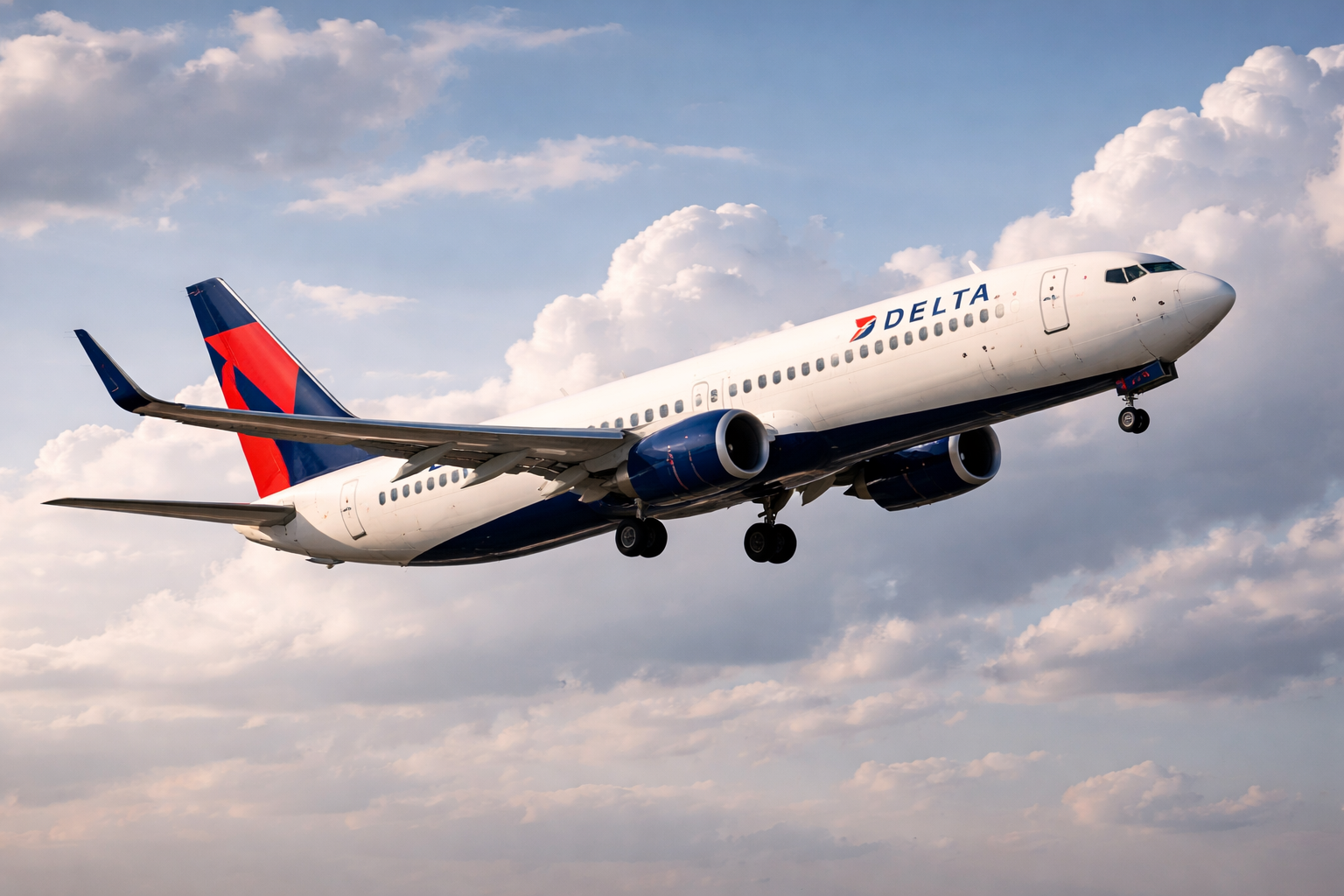
Airline stocks climbed on Tuesday after major US carriers signalled that robust travel demand is helping cushion the impact of soaring fuel costs triggered by the escalating Middle East conflict, offering relief to a sector battered in recent weeks.
Delta said the conflict in the Middle East has not dented travel demand so far, with both corporate and leisure segments showing strength across domestic and international markets.
Shares of Delta Air Lines rose nearly 5% in premarket trading, while JetBlue Airways and Frontier Airlines gained about 2% and 3%, respectively.
Broader gains were seen across the sector, with American Airlines up around 4% and Southwest Airlines rising about 3%, and United Airlines gaining 4% in premarket trading.
The rebound follows a sharp selloff in airline stocks during the first two weeks of March, as investors grew concerned about the impact of higher oil prices on profitability due to the Iran conflict.
Airlines raise outlook
Executives across airlines indicated that demand for air travel has remained strong, even as geopolitical tensions disrupt supply chains and push up operating costs.
“We’re seeing strength in every market that we look at,” Delta chief executive Ed Bastian said at the JPMorgan Industrials Conference.
Delta raised its first-quarter revenue outlook, citing continued strength in bookings.
The airline now expects revenue growth in the high-single-digit percentage range, compared with its earlier forecast of 5% to 7%.
The company maintained its adjusted earnings per share guidance of 50 cents to 90 cents, indicating that strong demand is helping offset rising costs.
American Airlines also said it now expects first-quarter year-over-year sales growth of more than 10%, compared with its earlier guidance of 7% to 10%.
The carrier added that adjusted earnings per share are likely to come in at the lower end of its guidance range, citing a sharp increase in jet fuel costs.
JetBlue and Frontier also struck a similar tone, lifting their unit revenue expectations for the quarter.
JetBlue said it now expects unit revenue growth of 5% to 7%, up from an earlier outlook of flat to 4%.
It said first-quarter travel demand improved more than expected, but rising fuel prices and operational disruptions are weighing on costs.
Frontier Airlines lowered its outlook for the current quarter, citing a sharp rise in jet fuel prices and operational disruptions caused by recent winter storms, and said its full-year guidance is under review.
However, the airline said underlying demand remains strong.
It added that easing competitive capacity and ongoing improvements in its revenue management strategies are supporting performance.
Revenue per available seat mile is now expected to grow in the mid-teens percentage range, an upgrade from its earlier forecast of more than 10% growth.
Frontier also said solid demand and fare trends have continued into the spring booking season, underpinning expectations of robust revenue growth in the coming months.
Airline stocks have witnessed losses in recent weeks
Airline shares have come under heavy pressure in recent weeks.
Since the start of the conflict, Southwest Airlines has fallen about 26%, making it one of the weakest performers in the S&P 500 over that period.
United Airlines has declined around 21%, while American Airlines has dropped 20%, and Delta about 14%.
The sector had begun to stabilise on Monday as oil prices eased slightly, with Tuesday’s gains extending the recovery.
Investors are now closely watching updates from airline executives at the JPMorgan conference, where carriers are expected to provide more clarity on demand trends and cost pressures.
Fuel prices surge as conflict disrupts supply
The biggest challenge for airlines remains the sharp rise in fuel costs.
Jet fuel prices have climbed more than 50% since US and Israeli strikes on Iran in late February, reflecting disruptions to global energy supplies.
Prices have surged to between $150 and $200 per barrel, compared with about $100 before the conflict, as attacks on infrastructure and shipping routes have tightened supply.
Fuel is the second-largest expense for airlines after labour, typically accounting for 20% to 25% of operating costs.
The sudden spike has raised concerns about margins, particularly heading into the crucial summer travel season.
Pricing power under scrutiny
A key question for investors is whether airlines can pass on higher fuel costs to consumers through fare increases without dampening demand.
“We believe the market will focus on airline commentary around the degree to which higher fuel costs can realistically be passed along through increased fares,” UBS analyst Atul Maheswari said in a note late Sunday.
Airlines typically hold around two weeks of fuel inventory, providing a short-term buffer against price spikes.
However, the longer-term impact beyond the first quarter remains uncertain if elevated fuel costs persist.
“We expect airlines to suspend FY26 outlook given the significant uncertainty around fuel costs for the rest of the year,” UBS analysts write.
The post Airline stocks rise as Delta, JetBlue signal strong demand despite oil spike appeared first on Invezz
