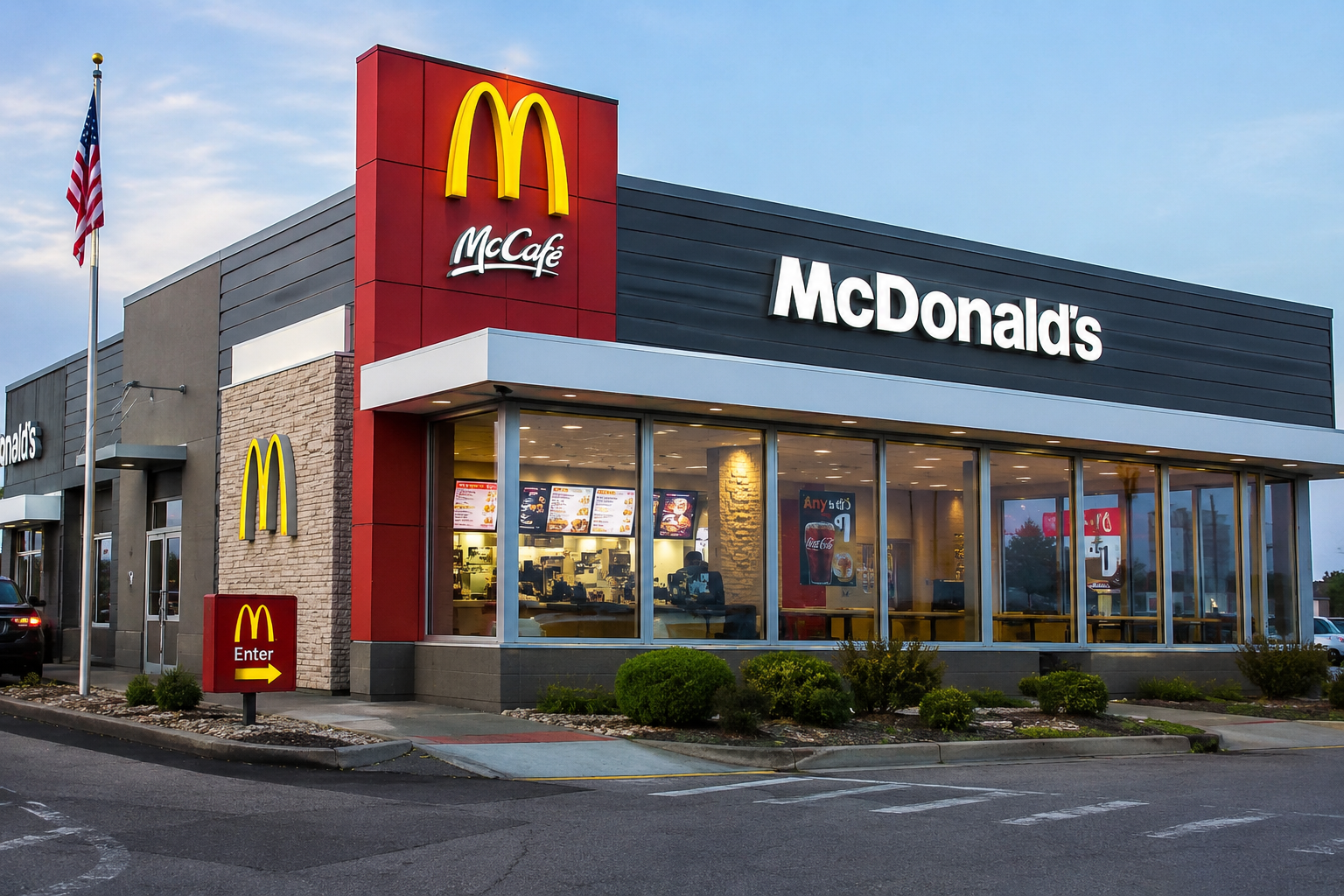
McDonald’s (NYSE: MCD) shares rose more than 3% in premarket trading on Thursday after the fast-food giant reported first-quarter earnings and revenue ahead of Wall Street expectations.
The beat was helped by continued demand for value-focused menu offerings and marketing campaigns aimed at budget-conscious consumers.
The company reported net revenue of $6.52 billion for the quarter, above analysts’ estimates of $6.47 billion, according to FactSet data.
Adjusted earnings came in at $2.83 per share, comfortably ahead of expectations for $2.74.
The results come as restaurant chains across the United States grapple with weaker consumer spending, higher fuel costs and growing economic uncertainty tied to the Iran war and persistent inflation.
Comparable sales remain resilient
McDonald’s said global comparable sales rose 3.8% during the quarter, while US same-store sales increased 3.9%.
Global systemwide sales climbed 6% on a constant-currency basis to $34 billion.
However, the US comparable sales figure fell slightly short of Wall Street expectations for a 4.2% increase, according to LSEG data.
The company has increasingly leaned on lower-priced combo meals, discounts and limited-time offers to attract customers who have become more cautious with discretionary spending after years of menu price increases across the fast-food industry.
Executives said value meals, menu updates and increased marketing efforts helped maintain customer traffic even as household budgets remained under pressure from higher grocery and gasoline prices.
Competition intensifies among burger chains
The quarter also saw McDonald’s launch its premium-priced Big Arch burger, part of the company’s effort to refresh its menu and drive customer engagement.
A promotional video featuring Chief Executive Chris Kempczinski trying the burger gained traction online and drew responses from rivals.
Burger King, owned by Restaurant Brands International, released its own marketing push around its upgraded Whopper sandwich and reported its strongest same-store sales growth in nearly two years.
The broader fast-food sector has increasingly relied on promotions and affordability messaging as consumers become more selective about spending.
Analysts have noted that lower-income diners are increasingly opting for smaller or single-item purchases instead of full meals.
Consumer spending pressures persist
Industry peers, including Wingstop and Domino’s Pizza, have also recently reported softer quarterly sales growth, citing pressure on consumer spending from higher fuel costs.
McDonald’s traffic trends during the quarter reflected the uneven spending environment.
According to data from Placer.ai, same-store visits declined 1.3% in January amid winter storms before rebounding 3.8% in February on stronger demand.
Traffic growth slowed again in March to 1.2% as rising fuel prices weighed on household budgets.
The company has also expanded into lower-priced beverage offerings, launching new cold drinks aimed at competing with specialty beverages offered by chains such as Starbucks.
Despite the softer-than-expected US sales growth, investors appeared encouraged by the company’s ability to outperform profit expectations while navigating a difficult consumer environment.
The post McDonald’s tops Q1 estimates, shares surge 3% in premarket trading appeared first on Invezz
