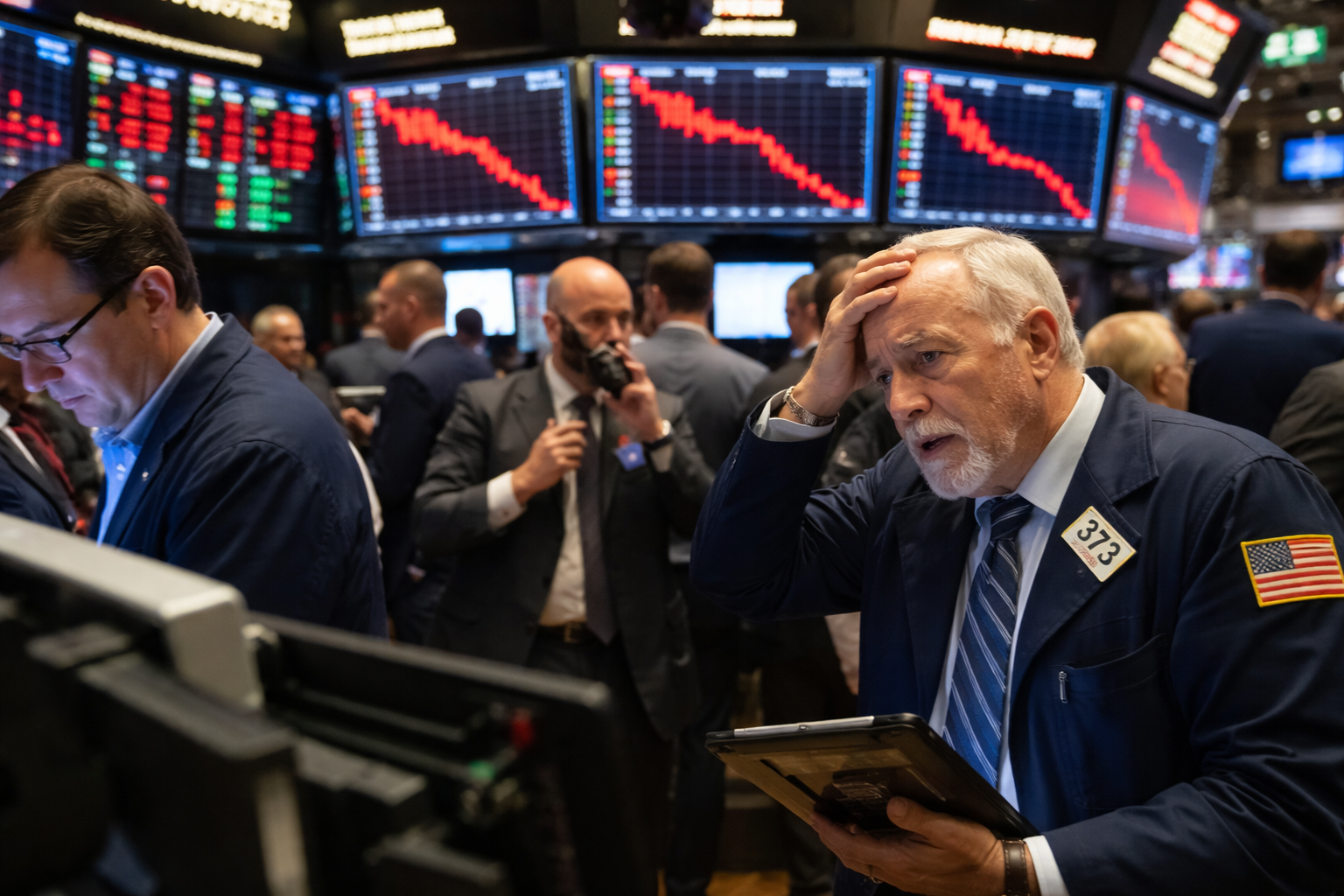
US stocks fell sharply on Friday as rising Treasury yields, surging oil prices, and fading enthusiasm surrounding artificial intelligence stocks pressured markets following weeks of record-setting gains.
The Dow Jones Industrial Average dropped roughly 537 points, or about 1.1%, while the S&P 500 lost approximately 1.2%.
The Nasdaq Composite declined about 1.5% as technology and semiconductor stocks led the broader market lower.
The selloff followed another strong session Thursday, when the Dow reclaimed the 50,000 level and the S&P 500 closed above 7,500 for the first time.
Investors shifted toward safer assets as Treasury yields climbed sharply amid renewed concerns that inflation could remain elevated longer than expected due to rising global energy prices linked to the Middle East conflict.
The yield on the benchmark 10-year Treasury note climbed to its highest level since May 2025, while the 30-year Treasury yield rose above 5.1%.
Semiconductor and AI stocks lead declines
Technology and semiconductor shares, which have fueled much of the market’s rally this year, faced heavy selling pressure Friday as investors locked in profits after substantial recent gains.
Intel shares dropped about 5%, while Advanced Micro Devices and Micron Technology fell roughly 3% and 4%, respectively.
Nvidia declined approximately 2%, extending weakness across the broader semiconductor sector.
Cerebras Systems, which surged 68% during its Nasdaq debut on Thursday, fell roughly 4% as momentum in AI-linked stocks cooled.
Microsoft was one of the few major technology stocks to rise Friday after billionaire investor Bill Ackman disclosed that Pershing Square had established a position in the company.
Oil prices and inflation fears pressure markets
Energy markets remained a central focus as oil prices climbed sharply following escalating rhetoric surrounding the ongoing conflict involving Iran.
US West Texas Intermediate crude rose roughly 3% to around $104 per barrel, while Brent crude climbed to approximately $108.
Crude prices accelerated after President Donald Trump said he was “not going to be much more patient” with Iran and added that “they should make a deal.”
Comments from Iranian Foreign Minister Abbas Araqchi also raised doubts about the stability of the fragile truce in the region and reduced optimism that shipping through the Strait of Hormuz would normalize soon.
The renewed rise in energy prices intensified concerns that inflation pressures could spread more broadly throughout the global economy.
According to CME Group’s FedWatch tool, the probability of a 25-basis-point Federal Reserve interest rate hike in December has climbed sharply over the past week.
Trump-Xi summit disappoints investors
Investor sentiment was also weighed down by disappointment surrounding the conclusion of the summit between President Trump and Chinese President Xi Jinping.
Markets had hoped the high-level meetings would produce clearer progress on trade, tariffs, semiconductor policy, and the Iran conflict.
While both sides reportedly agreed that the Strait of Hormuz should remain open, investors viewed the summit as lacking major breakthroughs.
Boeing shares fell another 3% Friday after declining nearly 5% in the previous session.
Investors reacted negatively after Trump announced that China had agreed to purchase 200 Boeing aircraft, only modestly above prior expectations.
The post Dow slides 537 points as rising oil prices rattle AI-fueled rally appeared first on Invezz
