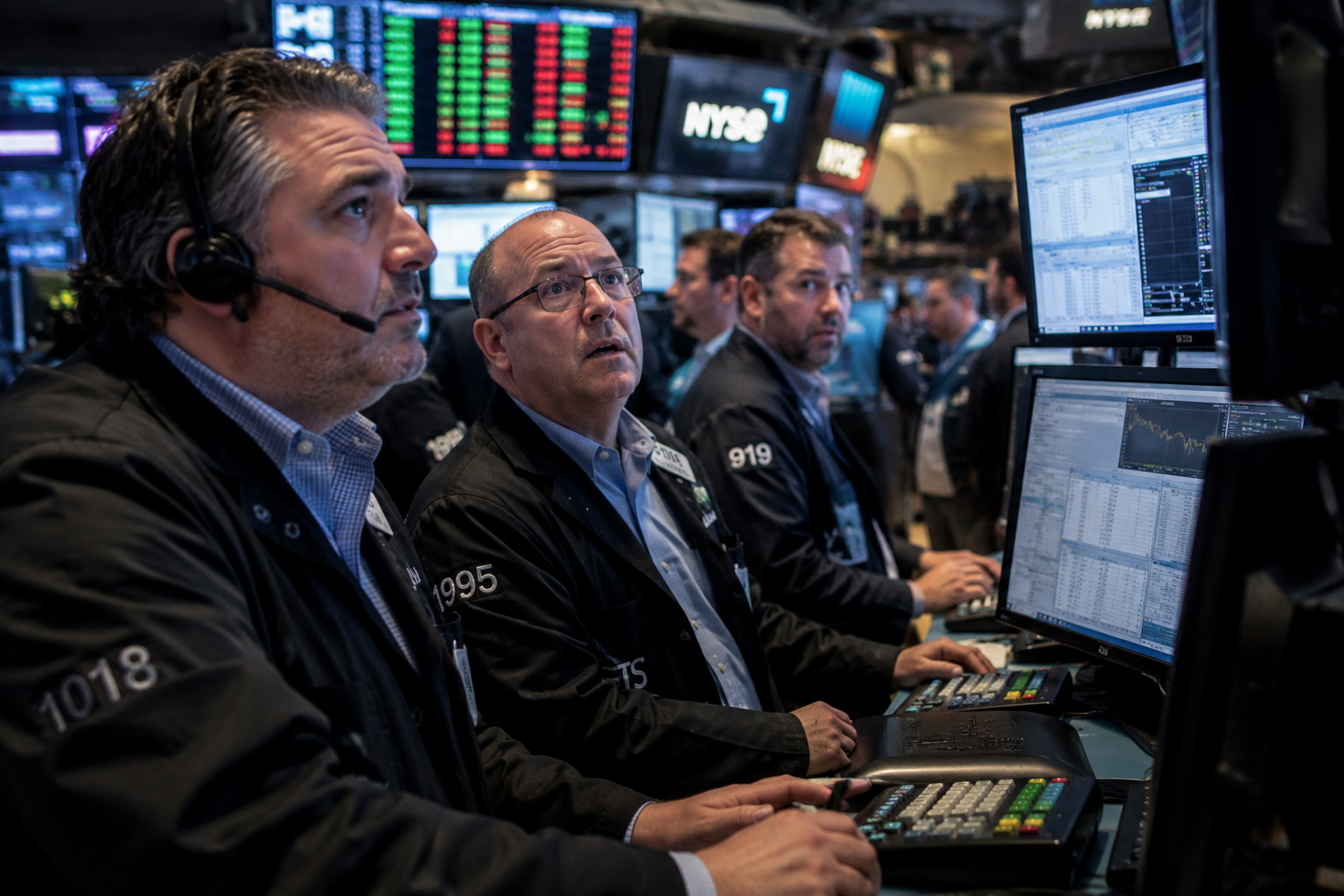
US stocks ended lower on Monday as renewed military hostilities between the United States and Iran pushed oil prices higher and revived concerns about inflation and monetary policy.
The decline came as investors prepared to close out a volatile August, with all three major indexes still on track to post monthly gains.
The Dow Jones Industrial Average dropped 380.22 points, or 0.71%, to 53,179.77.
The S&P 500 fell 0.36% to 7,684.37, while the Nasdaq Composite declined 0.16% to 26,360.91.
The renewed weakness followed the first direct exchange of fire between the US and Iran in a month.
Higher crude prices and rising Treasury yields added to pressure on equities, while investors continued to assess Federal Reserve Chair Kevin Warsh’s recent hawkish comments on inflation.
Oil prices rise as US-Iran tensions escalate
US Central Command confirmed that the US struck two rocket launchers on Iran’s Larak Island on Sunday.
The strike was the first publicly acknowledged US attack on Iranian positions since late July. Iranian state media reported that Tehran responded by attacking US bases in Jordan.
The renewed hostilities increased concerns about oil supplies as the conflict affected shipments through the Strait of Hormuz.
West Texas Intermediate crude rose nearly 3% to $85.76 a barrel, while Brent crude futures gained almost 3% to $90.49.
Energy stocks benefited from the rise in crude prices. Halliburton and Valero Energy advanced, while the S&P 500 energy sector posted solid gains.
The increase in oil prices also contributed to higher longer-dated Treasury yields, adding to pressure on stocks.
Investors remained focused on whether sustained energy costs could contribute to broader inflation and affect the Federal Reserve’s interest-rate decisions.
Fed rate hike bets increase
Markets are increasingly pricing in the possibility of a September rate increase following Warsh’s comments at the Jackson Hole symposium.
Warsh said recent inflation readings, although better than expected, had not demonstrated a meaningful improvement in underlying trends.
His comments came after mixed economic data, with July consumer inflation showing relatively mild price pressures while the Personal Consumption Expenditures reading was hotter than expected.
Financial markets were pricing in more than a 65% probability of a 25-basis-point rate hike at the end of September, according to the CME FedWatch tool.
Investors will receive additional economic data this week, including the August employment report on Friday. Manufacturing and services data are also scheduled, potentially providing further clues about the economy and the Federal Reserve’s policy outlook.
Stocks finish August with monthly gains
Despite Monday’s declines, the major indexes closed positive in August. The Dow was up more than 1% for the month and posted its fifth consecutive monthly advance.
The S&P 500 and Nasdaq were up about 2% and 3%, respectively.
Technology stocks led the monthly gains, with the S&P 500 technology sector rising nearly 6%.
Nvidia climbed more than 9%, while Microsoft and Micron Technology gained 10% and 15%, respectively.
The month was nevertheless marked by volatility as inflation concerns pushed Treasury yields to multi-year highs.
The Treasury Department announced plans to increase debt repurchases, but long-term yields remained elevated.
Elsewhere, GameStop shares rose after the company said it would use cash to fund about 27% of a previously announced $1.4 billion debt exchange, avoiding further share dilution.
The post Dow falls 380 pts as Iran conflict lifts oil prices and rate hike concerns appeared first on Invezz
