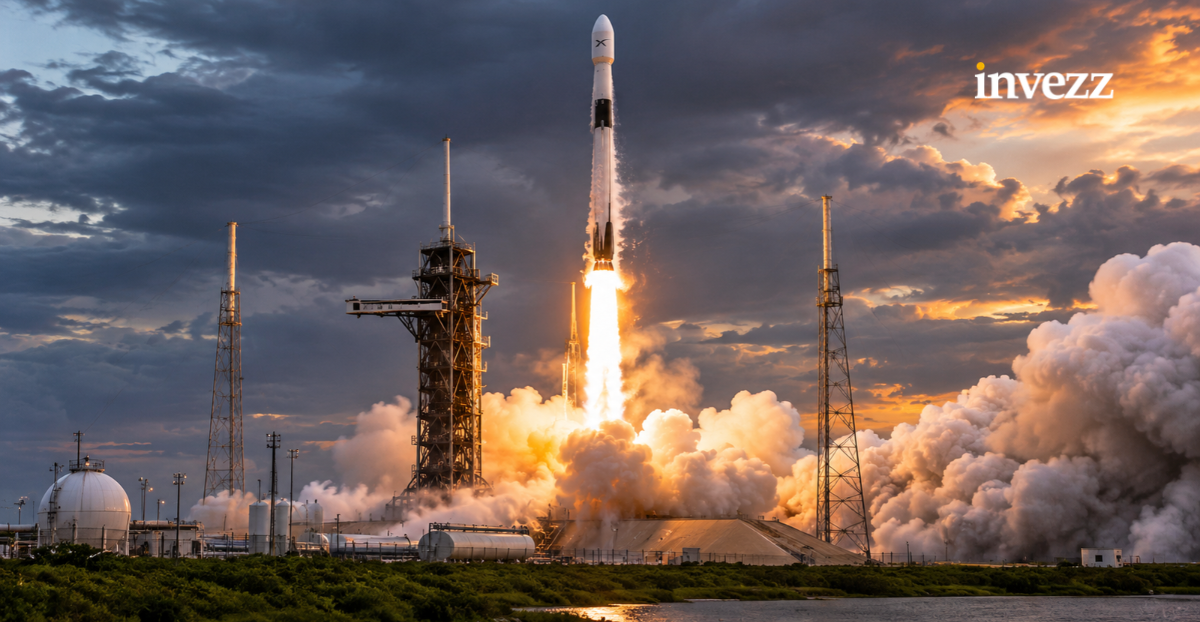
SpaceX (SPCX) stock is inching lower on Friday after management announced a $32 billion bond sales to finance the company’s access to Nvidia’s artificial intelligence (AI) chips.
The largest slice of that deal yielded 8.259%, well above the 5.95% for the average US investment-grade bond on Thursday.
The sale gives SpaceX a way to expand its AI business without issuing new shares.
But it also puts a price on that expansion: the company is committing to years of lease payments while the revenue those chips can generate remains uncertain.
What the 8.259% yield actually tells investors
The 8.259% yield applied to about $25.2 billion of notes, the largest of three tranches.
That was 231 basis points above the broad investment-grade average and roughly 106 basis points above where SpaceX’s own 2031 corporate debt traded Thursday.
The comparisons are imperfect because the securities differ in structure and repayment terms.
Still, the pricing shows how much return investors were offered to fund this particular buildout.
And because 8.259% is the yield on one tranche, multiplying it by $32 billion would misstate the deal’s annual interest bill.
SpaceX shareholders should focus on the lease payments the company owes and how much operating cash the equipment can generate against them.
How the bond sale helps SpaceX grow without dilution
The bullish case starts with what SpaceX gets for the money.
Under its agreement with an Apollo-managed entity, the giant expects to lease Nvidia’s next-gen Vera Rubin chips and related equipment as deliveries begin in the first half of 2027.
That lets it bring more computing capacity online for Grok and cloud customers while spreading payments over roughly five years.
CFO Bret Johnsen said in October that SpaceX was seeing payback periods of less than a year on its AI infrastructure investments.
If the new capacity comes close to that pace, existing shareholders could benefit from the expansion without giving up any of their ownership to finance it.
The test is whether those returns hold as SpaceX adds capacity on a much larger scale.
Why the terms make the pullback harder to buy
The deal is positive for SpaceX’s ability to expand, but the terms tilt the stock read bearish in the near term.
The company expects roughly $40 billion in principal payments across the broader lease arrangement, and those commitments can outlast today’s pricing for AI computing.
If customers rent fewer hours than SpaceX expects, or newer chips drive down what customers will pay, the lease payments still come due.
The strongest evidence for buying the dip would be customer contracts that secure both usage and pricing, alongside cash flow figures that show what remains after power, operating costs, and lease payments.
Until then, the bond sale gives investors more reason to model those obligations than to raise their estimates for what the AI business is worth.
AI disclosure: AI tools assisted with research and drafting of this piece. An Invezz editor reviewed the facts, sources and wording before publication. Any opinions or analysis are Invezz’s, not those of an automated system.
The post SpaceX stock slips: why its 8.26% bond yield matters appeared first on Invezz
