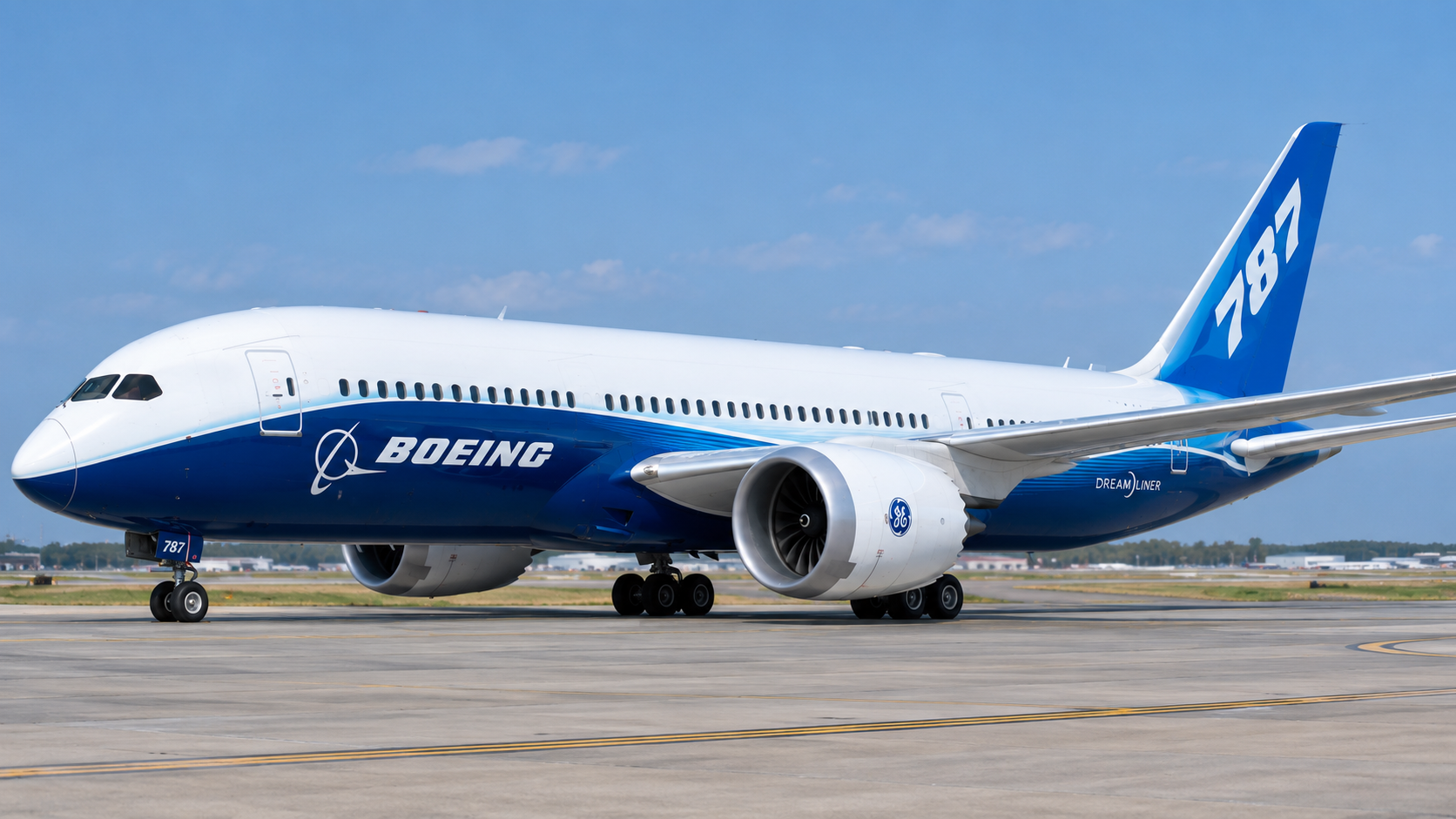
Boeing shares BA rose about 3% in premarket trading Wednesday after the aircraft manufacturer secured a more than $20 billion contract from the US Pentagon and Navy to develop the next generation of fighter jets.
The long-term agreement covers Boeing’s sixth-generation F/A-XX Strike Fighter, which is designed to replace the US Navy’s fleet of F/A-18 Super Hornets.
Boeing said the new fighter will feature an open mission systems architecture, advanced mission systems and greater operational reach and capacity.
The contract gives Boeing another major foothold in the US military’s next-generation fighter programs and represents its second sixth-generation jet award in roughly a year.
In 2025, the US Air Force selected Boeing to develop its F-47 fighter.
Shares of Northrop Grumman, which competed against Boeing for the government program, fell about 4% in premarket trading Wednesday.
“The F/A-XX is a critical pillar in our commitment to maintaining peace through strength. F/A-XX will dominate contested airspace, extend operational reach, and deliver a decisive combat advantage for the warfighter,” said Michael P. Duffey, Under Secretary of War for acquisition and sustainment.
Analysts call deal a major shift for Boeing defense
The F/A-XX award comes after years of pressure on Boeing’s defense operations and provides the company with a significant new long-term program.
“This award represents a near-complete reversal of Boeing’s defense trajectory,” aerospace and defense analysts at RBC Capital Markets, led by Ken Herbert, wrote in a Tuesday note.
“Entering 2025, the company appeared to face a credible risk of exiting fighter production altogether.”
The analysts said the agreement effectively removes Lockheed Martin and Northrop Grumman as participants in the next-generation program for the foreseeable future.
However, analysts also cautioned that the defense award alone is unlikely to determine Boeing’s broader financial recovery.
“This win is truly important for Boeing; for investors, however, the most meaningful financial development over time will be the company’s progress boosting commercial aircraft production and cash flow per plane at BCA [Boeing Commercial Airplanes],” a team of aerospace and defense analysts at JPMorgan, led by Seth Seifman, wrote in a Tuesday note.
That distinction leaves Boeing’s commercial aircraft operations at the center of the investment story, even as the latest defense contract strengthens its longer-term order book.
737 MAX software issue weighs on shares
Boeing shares have fallen about 18% this year and around 10% over the past month, reflecting continuing concerns around the company’s commercial aircraft business.
The stock suffered a particularly sharp decline Monday, dropping nearly 7% after The Wall Street Journal reported that Boeing had identified a new “software glitch” on its 737 MAX aircraft.
The Federal Aviation Administration subsequently said it would postpone certification of the 737 MAX 10 until the software issue is resolved.
“We haven’t concluded whether this is a safety-of-flight issue or not, but we will be delaying the 10 … until we’re satisfied that we don’t have an issue here,” FAA Administrator Bryan Bedford said at a press conference on air traffic modernization in Washington, D.C., on Monday.
The certification delay adds another hurdle to Boeing’s efforts to increase commercial aircraft deliveries and improve cash generation.
Boeing is also facing uncertainty around labor negotiations, with a union vote underway that could potentially lead to a strike in October if an agreement is not reached.
UBS sees long-term cash flow as key
The fighter contract was accompanied by supportive commentary from several Wall Street analysts, helping investors look beyond Boeing’s immediate commercial-aircraft challenges.
Susquehanna’s Charles Minervino reiterated a Buy rating and a $285 price target, describing the 737 MAX software delay as manageable.
UBS also maintained a Buy rating and a $275 price target.
The target is more than 46% above Boeing’s Tuesday closing price.
UBS said Boeing’s recent selloff had priced in near-term setbacks while assigning limited value to the company’s normalized earnings potential.
The bank continues to forecast about $20 billion in free cash flow by 2030.
Boeing has lost more than 20% of its value, or nearly $40 billion in market capitalization, since its MAX-7 certification milestone in August, according to UBS.
The bank said the decline reflects a high probability of a material near-term hit to cash flow, while arguing that Boeing’s normalized earnings potential remains unchanged.
UBS identified the MAX 10 certification delay and other timeline setbacks as risks to the timing of cash-flow growth.
It said a potential strike presents a larger financial risk because it could increase cash burn and create balance-sheet pressure while also affecting the certification timeline for the 777X.
The bank considers the MAX 10 software issue manageable.
According to UBS, the problem causes automated vertical navigation guidance to disengage following a missed approach and subsequent landing scenario.
Boeing has known about the issue for years and twice concluded that it did not pose a safety risk.
The issue will now go through an FAA review process that could take weeks to months, although UBS considers a resolution within weeks more likely.
Boeing’s backlog remains a long-term support
At around $184 a share, UBS said the market was pricing Boeing at only about $7.7 billion in free cash flow, despite progress in its operations.
The bank forecasts $15.15 per share in free cash flow in 2028, implying a valuation of about 12 times that figure compared with 29 times for the S&P 500.
As near-term risks are resolved, UBS expects investors to refocus on Boeing’s longer-term cash-flow potential, supported by a backlog extending for nearly a decade.
The F/A-XX contract adds another substantial long-duration program to that picture, while Boeing’s ability to raise commercial aircraft production and cash flow per aircraft remains a key factor in determining the pace of its broader financial recovery.
The post Boeing stock rises on $20B US Navy contract; UBS says selloff gone too far appeared first on Invezz
