The Democrats’ sweeping midterm victory has dealt a major blow to technology billionaires and corporate interest groups.
They poured billions of dollars into political campaigns, hoping to secure a friendlier regulatory environment for artificial intelligence and the expansion of data centres.
The party won control of both chambers of Congress, delivering a decisive rebuke to Republican governance in Washington and ushering in a new era of congressional resistance to President Donald Trump.
The results could reshape the technology industry’s relationship with Washington, with Democratic lawmakers expected to intensify scrutiny of AI companies, their infrastructure investments and the growing influence of wealthy corporate donors in American politics.
The outcome is particularly significant for Silicon Valley’s biggest investors, who backed Republican candidates in an effort to protect the industry’s interests as concerns about the environmental, economic and social consequences of AI infrastructure development gained traction among voters.
Political headwinds facing Republicans, including the unpopular war with Iran and persistent consumer price pressures, have intensified in recent months.
The party had hoped that its advantage among technology billionaires and other wealthy contributors would help offset voter dissatisfaction.
Instead, Democrats routed their rivals across the country, flipping states that had voted Republican for decades and that Trump had won by double-digit margins just two years ago.
“Tonight’s results are a wake-up call for corporate special interests and billionaires who have been rigging the economy,” said Rep. Chris Pappas, who defeated former Republican Sen. John Sununu to win an open Senate seat in New Hampshire.
Dow Jones futures and S&P 500 futures first slipped on Tuesday evening as investors assessed the implications of a more adversarial Congress for corporate America.
However, they were later seen rising, with Dow Jones futures rising more than 1% at 4 am on Wednesday, S&P 500 futures rising about 0.8%, and Nasdaq futures rising about 0.6%.
Record political spending fails to deliver for tech donors
The elections were the most expensive in US history, with technology, cryptocurrency, and other corporate interests spending heavily to influence the outcome.
Ad industry tracker AdImpact estimates that political advertising spending reached $11.6 billion during the election cycle, surpassing the $11.2 billion spent during the 2024 presidential election.
OpenSecrets, a non-partisan research group that tracks political money, estimates that total midterm spending is on course to reach $11.9 billion.
The New York Times’ ranking of major political contributors, based on filings through the latest reporting deadline in mid-October, showed that the top 20 donors contributed roughly $2 billion to federal races during the cycle.
The top 40 donors alone gave more than $2.4 billion by mid-October, seven times the inflation-adjusted amount contributed by the top 40 donors in 2014, according to an analysis by the Brennan Center for Justice.
The political balance of that spending also changed significantly.
In 2014, the top 40 donors gave twice as much to Democrats as to Republicans.
This year, they contributed roughly three times as much to Republicans as to Democrats.
Spending by super PACs, which can accept unlimited contributions to support or oppose candidates, reached $2 billion by the end of September.
That was 51% higher than the inflation-adjusted amount spent during the previous midterm cycle, according to the Brennan Center.
A CNBC analysis of Federal Election Commission records found that 14 of the 20 largest donor groups backed Republicans exclusively or almost exclusively.
Cryptocurrency, AI and online gambling interests collectively poured more than $377 million into federal races.
The Democratic victory has therefore raised questions about whether corporate political spending can still secure favourable outcomes when voters are increasingly concerned about the influence of billionaires and powerful technology companies.
“Allying with the worst parts of the AI industry is just kryptonite for a campaign, and the results tonight double down on that,” said Alex Bores, the former New York lawmaker who was heavily outspent by Big Tech during a House primary earlier this year, according to Politico.
Elon Musk’s $474 million bet on Republicans backfires
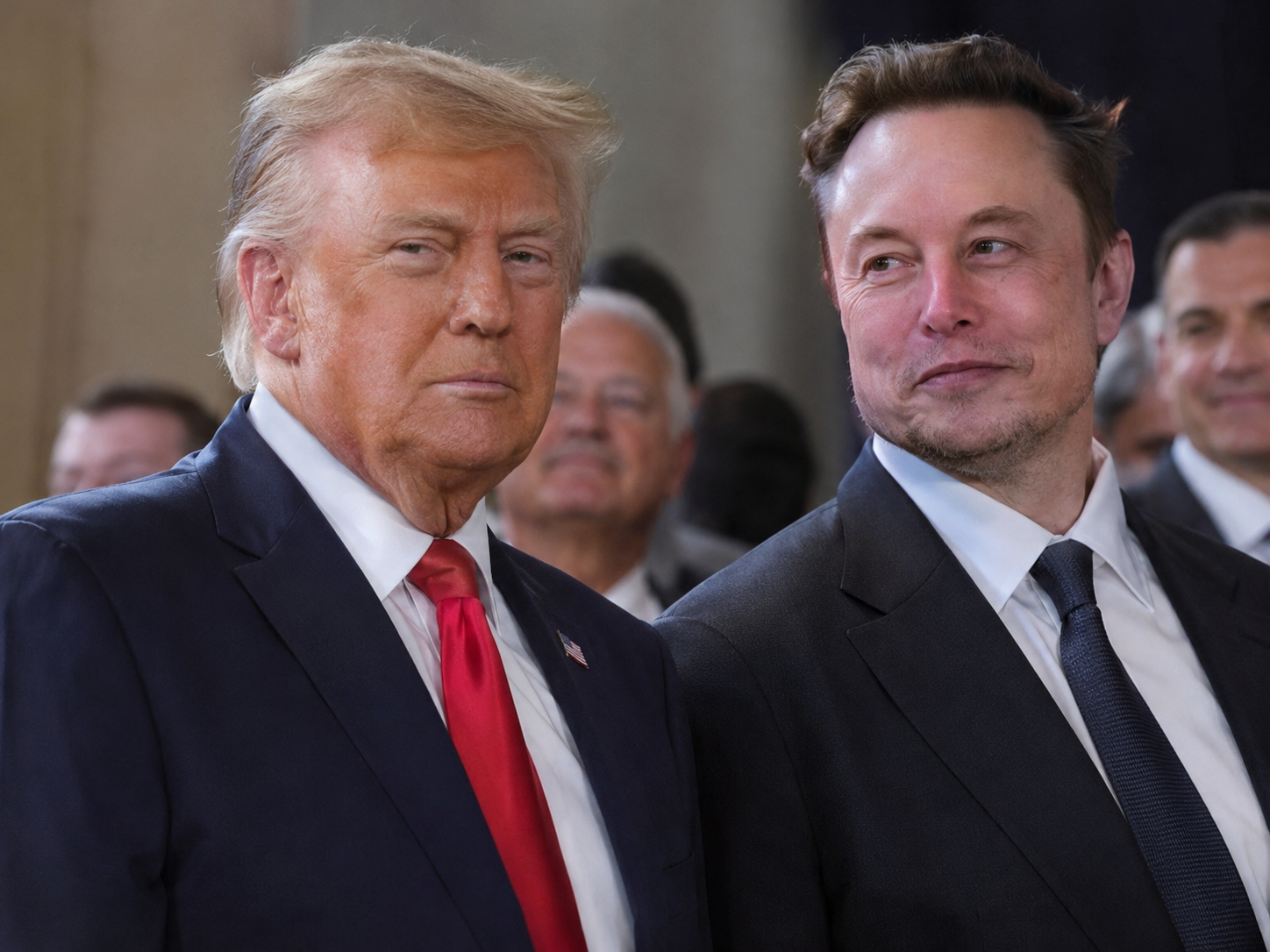
Elon Musk, the world’s richest person and the largest individual political donor of the election cycle, made an unprecedented financial commitment to Republican candidates.
According to The New York Times, Musk contributed about $474 million, or nearly half a billion dollars, during the midterms.
That makes him the largest individual political donor in a single election cycle outside wealthy candidates who finance their own campaigns.
Of that amount, approximately $216 million went to his super PAC, America PAC, which financed an extensive political operation across the country.
Musk also contributed $168 million to the Senate Leadership Fund, the main super PAC supporting Republican Senate candidates.
Much of the group’s spending was directed towards supporting Ken Paxton, the Republican nominee in Texas.
But the spending failed to prevent Democratic victories in the state.
James Talarico defeated Paxton despite the millions Musk spent to stop him.
On the same ballot, Hinojosa defeated Abbott after campaigning against the rapid expansion of data centres in Texas and accusing the governor of prioritising Big Tech interests over local communities.
Musk’s financial involvement may have become a political liability as voters expressed concerns about corruption and the growing influence of billionaires.
Talarico repeatedly attacked Musk during the campaign, accusing the billionaire of attempting to buy “his very own personal United States Senator.”
The Democratic victory could expose Musk to greater congressional scrutiny.
Lawmakers have signalled plans to investigate several aspects of his activities, including his tenure as head of the Department of Government Efficiency, his companies’ federal contracts and his role in the Russia-Ukraine war.
SpaceX and Tesla stocks both fell nearly 4% in premarket trading on Wednesday.
Other major Republican donors included Midwestern industrialists Richard and Elizabeth Uihlein, who contributed $150 million to the party.
Marc Andreessen and Ben Horowitz, founders of Silicon Valley venture capital firm Andreessen Horowitz, contributed $116.4 million to Republican candidates and causes.
The investors have sought to influence policy around cryptocurrency and artificial intelligence.
OpenAI co-founder Greg Brockman and his wife, Anna, also contributed $50 million to Republicans.
They have said their political involvement is motivated by the need to maintain American competitiveness in AI.
Crypto companies donated generously
Cryptocurrency interests were among the largest corporate political spenders during the election cycle.
Crypto-linked organisations contributed more than $200 million, outpacing spending by online betting and data centre development groups, according to Public Citizen.
Fairshake, the cryptocurrency industry’s major political action committee, and its affiliated super PACs supported 33 House candidates, including 19 Republicans and 14 Democrats.
Ripple Labs and its co-founder Chris Larsen contributed $73.1 million, of which $48 million went to Fairshake.
Coinbase contributed $55.3 million, including $48 million to the same political organisation.
Both companies have a strong interest in shaping the regulatory environment for digital assets.
A more favourable Congress could help advance legislation that provides greater clarity for cryptocurrency businesses and limits regulatory uncertainty.
However, Democratic control could slow the passage of crypto-friendly legislation and increase the likelihood of investigations into companies with political links to the Trump family.
Soros, Bloomberg, Hoffman among top Democrat donors
Democratic donors also included several of the country’s wealthiest individuals.
George and Alexander Soros contributed $103.4 million to the party, while Mike Bloomberg donated about $84.8 million, with much of his spending directed towards House races.
LinkedIn co-founder Reid Hoffman contributed more than $40 million.
“These elections were an overwhelming wave against Trump and his cronies. Now it’s on Democrats to make a hopeful case for our future — to fight for an economy that serves every American, not just the already rich and powerful,” Hoffman wrote on X after the results.
AI companies face investigations and demands for accountability
The election results suggest that public anxiety over artificial intelligence and the influence of technology billionaires has become a significant political issue.
Concerns about job losses, privacy, surveillance and the environmental impact of data centres have helped turn the technology industry into a prominent target for candidates seeking to distance themselves from corporate interests.
Republican messaging around AI, which frequently emphasised the need for the US to maintain its lead over China, also appears to have failed to persuade voters in key races.
“There’s no way that you can look at the polling and how people were voting around AI and data centers and not conclude that that wasn’t certainly a factor in how Republican messaging around the topic just really turned off voters,” said GOP lobbyist Greta Joynes, who co-chairs the technology and telecommunications practice at Brownstein Hyatt Farber Schreck, according to Politico.
“It’s proven to be incredibly unpopular, and ‘beat China’ did not resonate at all in places that it really needed to.”
Democratic control of the House gives the party the power to launch investigations, issue subpoenas, and compel corporate executives to provide testimony and records.
Lawmakers have already indicated that AI companies will be among their priorities.
Rep. Greg Casar, the Texas Democrat who chairs the Congressional Progressive Caucus, said the new House majority should focus on the impact of AI on American workers and consumers.
“The House Democratic majority must make it a top priority to protect Americans’ jobs, freedom, and lives from AI billionaires,” Casar said after Democrats were projected to win the House.
“AI company CEOs should be called to testify under oath.”
Rep. Robert Garcia, a California Democrat and the presumptive next chair of the House Oversight Committee, offered a brief warning: “Lawyer up,” he said in a post on X.
The prospect of congressional investigations could complicate the industry’s efforts to secure favourable federal policies and accelerate infrastructure development.
Texas results signal growing resistance to data centres
The election outcome in Texas could be particularly important for the AI infrastructure industry.
The state is projected to overtake Virginia as the world’s largest data centre market by 2030, according to JLL.
It has attracted major technology companies and developers seeking access to land, electricity and infrastructure needed to support AI computing.
However, rapid development has increasingly generated opposition from local communities concerned about electricity consumption, water use, rising utility bills and the impact of large facilities on their neighbourhoods.
Governor Greg Abbott had previously encouraged data centre investment before shifting his position this year as opposition grew.
Democratic candidates Talarico and Hinojosa capitalised on the discontent, attracting support from Republican voters unhappy with the pace of construction in their communities.
Hinojosa has promised to push lawmakers towards greater regulation of the industry.
The issue appears to have resonated beyond traditional party lines.
In a CNBC voter poll, 56% of respondents said data centres were a crucial or major factor in their voting decision, with Democrats assigning greater importance to the issue than Republicans.
The results could encourage other politicians to take a more critical position on data centre development, particularly in states where communities are already debating the cost of supporting energy-intensive facilities.
For technology companies, the challenge is no longer limited to securing access to capital, chips and electricity.
They may also have to contend with a more hostile political environment and greater demands to demonstrate that the benefits of AI infrastructure investment extend beyond shareholders and corporate executives.
The post US midterms: Musk, tech billionaires’ billions fail to quell voter concerns over AI appeared first on Invezz
