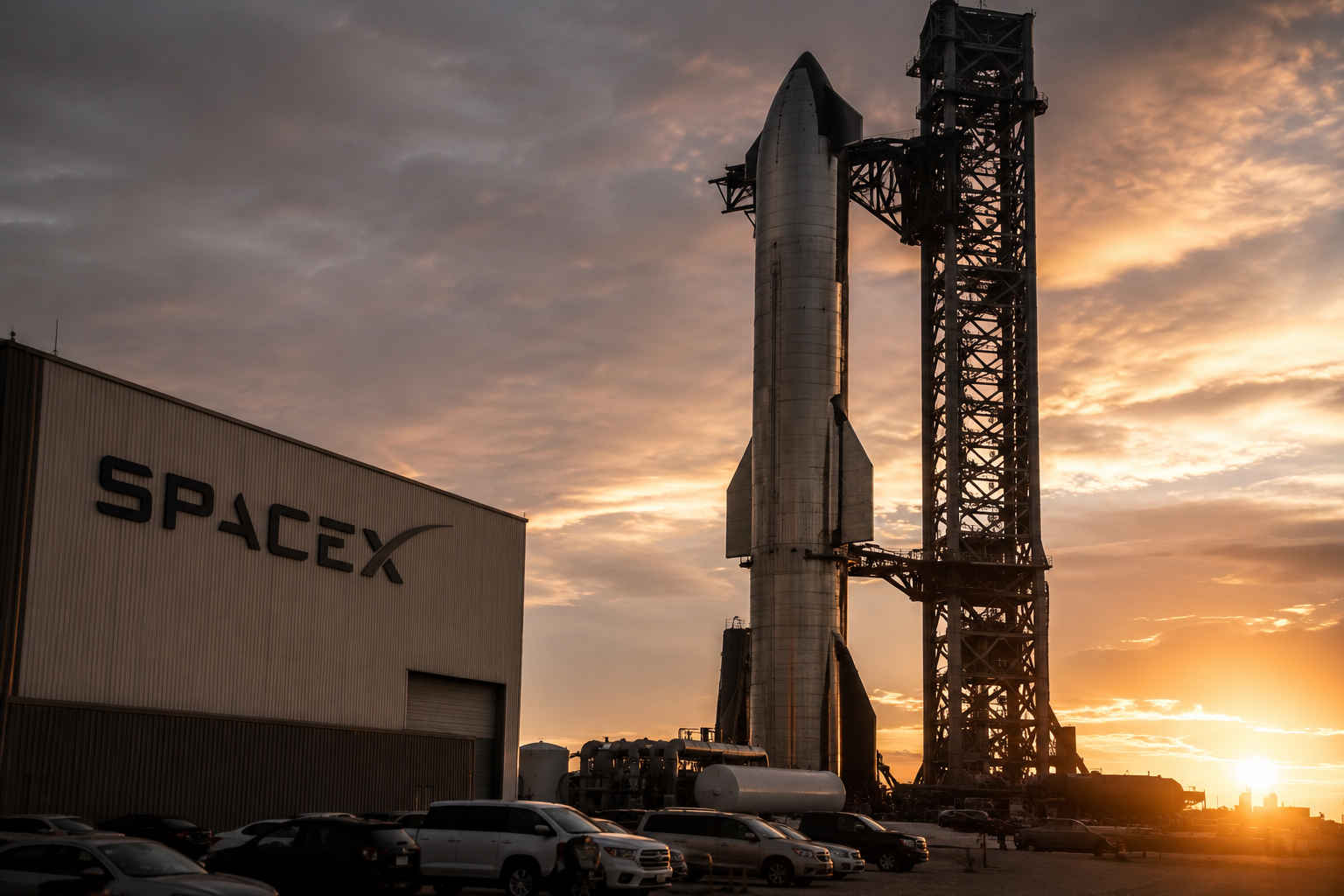
Shares of SpaceX (SPCX) rose 3% on Friday as investors prepared for the company’s addition to the Russell 1000 Index.
The move is expected to drive demand from passive investment funds and broaden the stock’s presence across major benchmarks.
The gains came after a difficult stretch for the newly public company.
The stock surged to $225 after opening above its issue price of $135.
It has, however, lost most of the gains and was trading above $158 on Friday, just 5% above its listing price of $150.
The stock has never closed below its IPO opening price and has surrendered nearly all of the gains generated by its record-breaking market debut.
Russell 1000 addition could boost demand
SpaceX is set to join the Russell 1000 following Friday’s closing bell as part of FTSE Russell’s latest rebalancing.
The inclusion was made possible after FTSE Russell relaxed its rules in May to allow certain large newly public companies to gain accelerated entry into its indexes.
The addition could create buying demand because passive index funds that track the Russell 1000 must purchase shares to reflect the benchmark’s composition.
SpaceX will enter the Russell 1000 with a classification of 90.4% growth and 9.6% value.
The company’s weighting and classification will be reviewed again during the next index reshuffle in December.
The Russell indexes are not the only benchmarks adding SpaceX. The Center for Securities Research already included the company in its US Total Market Index earlier this week.
SpaceX also becomes eligible for inclusion in MSCI indexes on Friday and is scheduled to join the Nasdaq-100 Index on July 6 after Nasdaq recently approved rules allowing the stock’s accelerated entry.
However, SpaceX will not become eligible for inclusion in the S&P 500 until at least June 2027.
Small public float limits immediate impact
Despite the upcoming additions, analysts say SpaceX’s immediate impact on passive investment portfolios may be limited by its relatively small public float.
The company sold less than 5% of its shares during its initial public offering, leaving only a limited number of shares available for public trading.
Many indexes use float-adjusted market capitalization when determining weightings.
As a result, SpaceX currently accounts for only 0.15% of the CRSP US Total Market Index, making it the benchmark’s 106th-largest holding by weight.
Morningstar analyst Zachary Evens described the IPO float as a “puny” amount that limits the stock’s near-term representation in index funds.
As of June 18, SpaceX’s float-adjusted market capitalization stood at $109.2 billion.
Lock-up expirations could reshape ownership
The company’s public float is expected to increase gradually as lock-up periods expire and insiders gain the ability to sell shares.
However, analysts do not expect a sudden flood of stock into the market.
Nikolai Roussanov, a professor of finance at the University of Pennsylvania, said, “As the free float increases with more insider sales, there’s going to also be increased demand from the index funds. And those two may [offset] each other. It’s not exactly clear.”
Evens estimates that SpaceX’s float ratio is unlikely to exceed 30% after 180 days and may remain below 50% even after additional insider shares unlock after 366 days.
CFRA analyst Keith Snyder said, “Your average insider is more faithful to the company than a standard insider would be,” noting that Musk has “this aura around him” that has captivated both employees and investors of Tesla and SpaceX.
“I think a lot of people are going to hold on because they believe in the long-term story of the company,” he added.
Meanwhile, the stock has struggled in recent sessions, falling 10% over the last five trading days as investors reassessed lofty valuations and concerns emerged that enthusiasm surrounding artificial intelligence spending may be cooling.
OpenAI is reportedly considering delaying its own initial public offering following SpaceX’s recent stock struggles.
The post SpaceX stock rises as Russell 1000 inclusion fuels index fund demand appeared first on Invezz
