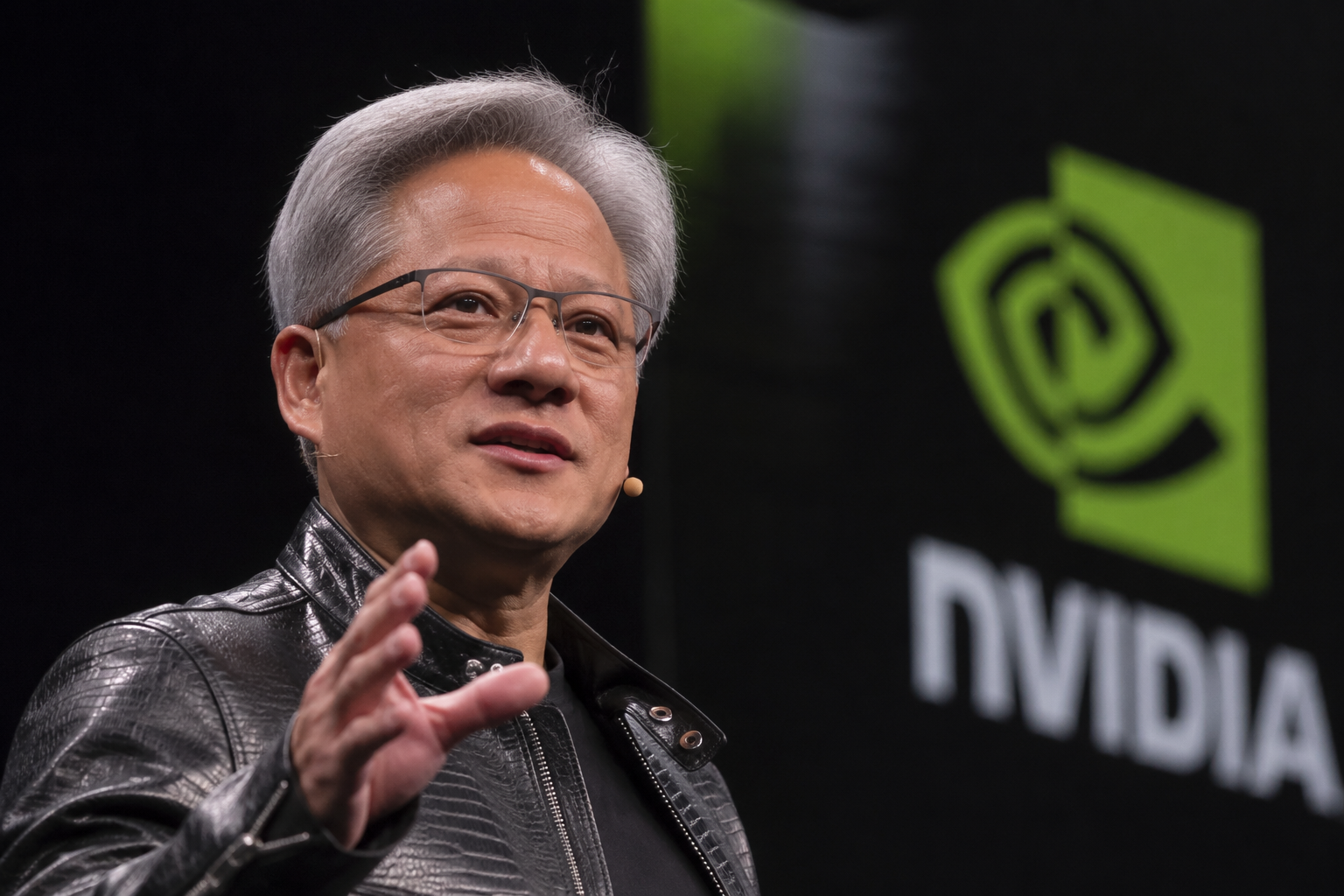
The race to challenge Nvidia’s dominance in artificial intelligence chips is entering a new chapter, with startups attracting billions of dollars in funding, Big Tech accelerating in-house chip development, and investors betting that the next phase of AI computing may not belong exclusively to graphics processing units.
While Nvidia continues to dominate the market for AI hardware, attention is increasingly shifting from training massive AI models to running them efficiently in real-world applications, known as AI inference.
That transition has opened the door for a new generation of chipmakers promising faster performance, lower power consumption, and significantly lower operating costs.
The latest reminder came on Wednesday when AI chip startup SambaNova raised $1 billion in fresh financing, highlighting investors’ willingness to back companies seeking to carve out a share of one of the world’s fastest-growing technology markets.
The funding round values SambaNova at $11 billion and was led by General Atlantic, with participation from Seligman Ventures, T. Rowe Price, and Capital Group.
The latest investment follows a separate funding round earlier this year in which the company raised more than $350 million from investors including Intel, alongside a strategic partnership.
According to a CNBC report published in April, AI chip startups raised $8.3 billion globally in 2026.
Unless funding markets experience a sharp downturn, investment in the sector is expected to reach record levels this year.
Source: CNBC
The focus shifts from training to inference
Nvidia built its dominance on graphics processing units originally designed for gaming but later adapted for AI model training.
Those chips remain the industry standard for building large language models.
However, as enterprises increasingly deploy AI applications rather than train new foundation models, the industry is paying greater attention to inference, the process through which trained AI models respond to user queries.
Many startups argue that GPUs, while exceptionally powerful, were never purpose-built for AI workloads.
Instead, they believe specialized processors designed specifically for inference can dramatically reduce costs while consuming less electricity.
List of AI chip startups looking to challenge Nvidia
SambaNova is far from the only company trying to loosen Nvidia’s grip on AI infrastructure.
Cerebras, which recently debuted on public markets after raising $5.5 billion, has long positioned itself as one of Nvidia’s strongest competitors.
Morgan Stanley has argued that the company enjoys a first-mover advantage in certain AI computing segments.
Another closely watched player is Groq, whose inference-focused architecture attracted so much attention that Nvidia agreed to license some of its chip technology and hired away its chief executive last December.
CNBC later reported that Nvidia had agreed to acquire Groq for $20 billion in cash, although neither company confirmed the report.
Groq has said it would continue operating independently under chief executive Simon Edwards.
Interestingly, Nvidia later introduced its own language processing unit at its annual GTC conference in March, suggesting that it is incorporating ideas emerging from newer competitors rather than ignoring them.
Another startup attracting attention is D-Matrix, founded in 2019.
The company says its processors can execute inference workloads up to 10 times faster while consuming five times less energy than standalone Nvidia GPUs, provided workloads remain relatively small.
D-Matrix has raised around $500 million to date, reaching an estimated valuation of roughly $2 billion.
Microsoft participated in its funding through its venture arm M12.
AI model makers seek to build their own chips
The competitive pressure is not coming solely from startups.
Many of Nvidia’s largest customers are simultaneously becoming rivals as they invest heavily in designing proprietary AI chips.
The rationale is straightforward. Developing custom silicon reduces dependence on Nvidia, lowers long-term infrastructure costs, and enables tighter integration between hardware and software.
Reuters reported this week that Chinese AI startup DeepSeek is developing its own AI chip in an effort to reduce reliance on Nvidia and Huawei processors used to train and deploy its models.
Earlier this month, The Information reported that Anthropic had held discussions with Samsung about collaborating on a future chip, although key decisions regarding its specifications and intended use remain unresolved.
OpenAI, last month, unveiled its first custom AI processor, named Jalapeño, developed alongside Broadcom.
Broadcom chief executive Hock Tan told Reuters that the processor performs on par with Nvidia’s Blackwell chips and Google’s tensor processing units.
Big Tech is increasingly becoming a competitor to Nvidia
Google itself is moving aggressively to reduce its reliance on Nvidia.
Rather than using the same processors for both AI training and inference, the company is separating those workloads into dedicated chips under the eighth generation of its tensor processing unit family.
Its TPU 8t and TPU 8i processors are expected to become available later this year.
Amazon is following a similar strategy.
Its AI chief, Peter DeSantis, recently told Bloomberg that Amazon Web Services is discussing the possibility of selling its Trainium AI chips to external customers, potentially creating one of the strongest alternatives to Nvidia in data centre infrastructure.
Such discussions remain at an early stage, but they follow Amazon chief executive Andy Jassy’s comments that demand for the company’s internally developed AI chips has been so strong that commercializing them is now under consideration.
Meta is also investing aggressively in custom AI hardware through an expanded partnership with Broadcom.
The company’s Meta Training and Inference Accelerator (MTIA) programme has already produced its first chip, the MTIA 300, which powers ranking and recommendation systems across Meta’s platforms.
Three additional generations are expected through 2027, with the later versions designed specifically for inference workloads that power AI assistants and respond to user queries.
Like Google and Amazon, Meta’s objective is to reduce dependence on Nvidia while tailoring chips to its own software stack and AI infrastructure.
The shift illustrates a broader trend across hyperscalers.
Rather than relying entirely on off-the-shelf GPUs, technology giants are increasingly building application-specific integrated circuits (ASICs) optimized for their own workloads.
AMD and Broadcom have already carved out significant positions
Unlike many startups, AMD and Broadcom have already established themselves as meaningful competitors in AI infrastructure.
AMD’s transformation has mirrored Nvidia’s in several ways.
Originally known for gaming graphics cards and PC processors, the company shifted its focus toward data centre accelerators and AI chips, allowing it to emerge as the second-largest public player in the AI accelerator market.
The strategy has paid off handsomely for investors.
AMD shares have surged more than 460% over the past five years, giving the company a market value exceeding $840 billion.
Broadcom, meanwhile, has become one of the most strategically important companies in custom AI silicon.
Rather than competing directly with Nvidia through merchant chips, Broadcom designs custom processors for some of the world’s biggest AI developers.
Melius Research analysts recently said Broadcom has visibility into about 10 gigawatts of AI demand by 2027 from customers including Anthropic and Meta Platforms.
The company’s influence expanded further on Wednesday after it signed a semiconductor agreement worth more than $30 billion with Apple.
Under the deal, Broadcom will design and manufacture “custom silicon components and cutting-edge wireless connectivity technologies” for Apple’s products.
Analysts see Nvidia’s lead narrowing, not disappearing
Despite the growing number of competitors, most analysts believe Nvidia’s leadership remains overwhelming.
“Nvidia is definitely going to see more competition compared to a year ago,” said KinNgai Chan, a managing director at Summit Insights Group, in comments to Reuters in March.
“Nvidia still has over 90% market share in both training and inference markets today.”
However, Chan expects that dominance to gradually erode over the coming years.
“We think Nvidia will begin to see share loss starting in 2027, once in-house ASIC programs gain some scale, especially in the inference market,” he said, referring to application-specific integrated circuits that are designed for dedicated workloads and offer higher efficiency than general-purpose GPUs.
Morningstar shares a similar long-term outlook.
“In the long term, we think it’s inevitable that Google and AWS will push to bring more chips and AI gear in-house, to Nvidia’s detriment,” Morningstar analyst Brian Colello wrote.
“We expect Nvidia to lose market share to Google’s TPUs and Amazon’s Trainium (especially if Anthropic and/or Google Gemini emerge as dominant frontier models), but we think Nvidia’s share should level out at 68% in 2030 (versus 80% today) within a much larger pie of AI spending,” he added.
Nvidia is fighting back on multiple fronts
However, all said and done, Nvidia is not standing still.
The company spent more than $18 billion on research and development during the financial year ended January 2026 as it accelerated work on next-generation AI processors, networking products and photonics technology.
During the latest conference call in May, Huang said Nvidia’s new “Vera” central processors give it access to a new $200 billion market.
Nvidia expects its Vera chips to generate $20 billion in revenue by the end of the current fiscal year.
Huang said those sales were not included in the company’s earlier projection of $1 trillion in revenue from its Blackwell and Rubin AI chip platforms between 2025 and 2027.
Perhaps more significantly, Nvidia is increasingly choosing collaboration over confrontation.
Instead of competing head-on with every emerging AI chip startup, Nvidia is increasingly choosing to collaborate with companies developing specialized inference processors.
Acquiring assets from AI inference startup Groq in December for $20 billion and announcing investments worth $4 billion in two photonics companies earlier this year were part of this strategy.
Also, by integrating some rival chips alongside its own GPUs in AI server racks, Nvidia is broadening its ecosystem while ensuring it continues to benefit from AI infrastructure spending regardless of which inference technologies gain the most traction.
That strategy allows Nvidia to participate in multiple AI hardware ecosystems while continuing to generate revenue even if customers adopt specialized inference chips alongside its GPUs.
On Wednesday, inference cloud provider Parasail announced it would deploy D-Matrix’s Corsair inference accelerators alongside Nvidia Hopper and Blackwell systems to deliver “up to 10x faster, more cost-efficient inference services” for customers.
Further, SambaNova’s products are designed to complement Nvidia hardware rather than replace it outright.
Rodrigo Liang, SambaNova’s chief executive officer, said its SN40 and SN50 chips can run the so-called decode portion of inference, unpacking the query from the model five to 10 times faster, which helps free up the same number of Nvidia chips for other tasks such as training.
Strong growth continues despite competitive pressures
Nvidia’s latest financial results suggest competition has yet to meaningfully dent its business.
Its data centre division, which remains the company’s primary growth engine, reported revenue of a record $75.2 billion, up 92% year over year.
Chief executive Jensen Huang sought to reassure investors that demand remains broad-based and that new products would help the company surpass the $1 trillion revenue opportunity it has projected for its flagship AI platforms.
Even so, NVDA shares fell 1.6% following the earnings release despite stronger-than-expected revenue guidance and the announcement of an $80 billion share repurchase programme.
The market reaction suggested investors are increasingly looking beyond current earnings and focusing on whether Nvidia can defend its dominant position as competitors multiply.
The stock has gained a relatively modest 4% this year and just over 23% over the past 12 months, a sharp moderation compared with its extraordinary gains during the early stages of the AI boom.
The post From startups to Big Tech, Nvidia’s rivals are multiplying: can it be dethroned? appeared first on Invezz
