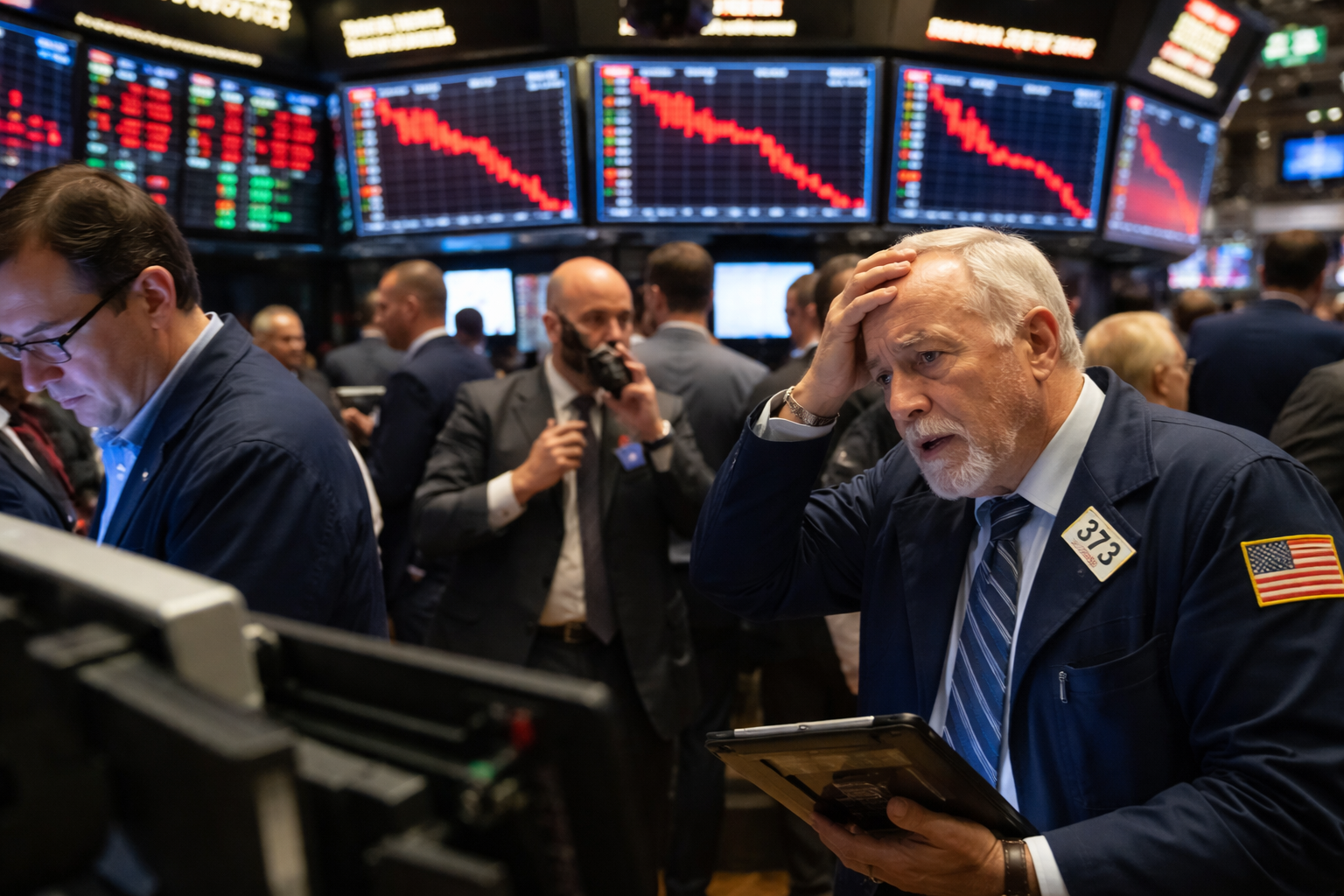
US stocks fell on Thursday as renewed concerns about artificial intelligence spending pressured technology shares, while rising geopolitical tensions in the Middle East pushed oil prices to a five-month high.
The Nasdaq Composite recorded its steepest daily decline since June, while the S&P 500 suffered its worst session since July.
Investors also moved into US Treasuries as they assessed the risks posed by rising energy prices, AI-related financing requirements and the outlook for Federal Reserve interest rates.
Nasdaq leads Wall Street lower as AI spending concerns return
The Nasdaq Composite dropped 2.60% to 26,008.86, while the S&P 500 fell 1.21% to 7,663.43. The Dow Jones Industrial Average edged up 0.02% to 52,867.98.
Technology stocks led the declines as investors reassessed the costs of expanding AI infrastructure and the financing required to support the industry’s growth.
Meta Platforms fell around 7% despite reporting better-than-expected third-quarter revenue and providing an upbeat outlook.
Investors focused on its rising AI expenditure, its first cash outflow in more than a decade, and plans to issue non-voting shares as it seeks greater flexibility to fund its expansion.
Chipmakers also came under pressure. Advanced Micro Devices fell more than 8%, Micron Technology declined 6%, and Nvidia lost 4%.
CoreWeave, a major provider of AI-focused cloud infrastructure, dropped more than 10% amid continued concerns about its debt and financing costs.
The Philadelphia Semiconductor Index also recorded a steep decline, extending its losses from its June 22 record closing high.
Despite the recent pullback, the index remained sharply higher for the year and continued to outperform the broader S&P 500.
Tesla shares also declined despite the electric vehicle maker reporting positive free cash flow for the quarter and lowering its 2026 capital expenditure plans.
Oil climbs as Middle East tensions raise supply risks
Oil prices surged after reports that the US and Israel were considering renewed strikes against Iran following next month’s US midterm elections.
Tensions increased further after Iran-backed Houthi forces launched new attacks against Saudi targets, raising concerns about potential disruptions to energy supplies.
Brent crude futures rose 3% to settle at $113.03 a barrel, while US West Texas Intermediate crude advanced 2.18% to $99.27.
Higher oil prices also raised concerns about inflation and the potential implications for Federal Reserve policy.
US jobless claims remained near multi-decade lows, suggesting labour market conditions could allow policymakers to maintain their focus on inflation.
Financial markets were pricing in the possibility of another 25-basis-point interest rate increase before the end of the year.
Treasury yields fall as investors seek safe-haven assets
US Treasury yields declined as investors sought safer assets amid volatility in technology stocks and rising geopolitical risks.
The benchmark 10-year Treasury yield fell more than 17 basis points to 4.974%, its lowest level in almost a month.
The two-year Treasury yield dropped more than 16 basis points to 4.66%.
The move marked a shift from earlier concerns about inflation and elevated borrowing costs, as investors reassessed the risks associated with AI-related financing and the outlook for energy prices.
Meanwhile, third-quarter earnings continued to provide mixed signals across the market.
Of the 111 S&P 500 companies that had reported results, 83% had exceeded analyst expectations, according to LSEG data.
Procter & Gamble shares rose after the consumer goods company beat revenue estimates, despite warning that higher commodity costs would weigh more heavily on annual profits.
Lockheed Martin gained after raising its annual sales and profit forecasts, while Spotify advanced after projecting fourth-quarter profit above Wall Street expectations.
The post Nasdaq falls 2.6% as AI spending fears hit tech stocks, oil prices jump appeared first on Invezz
