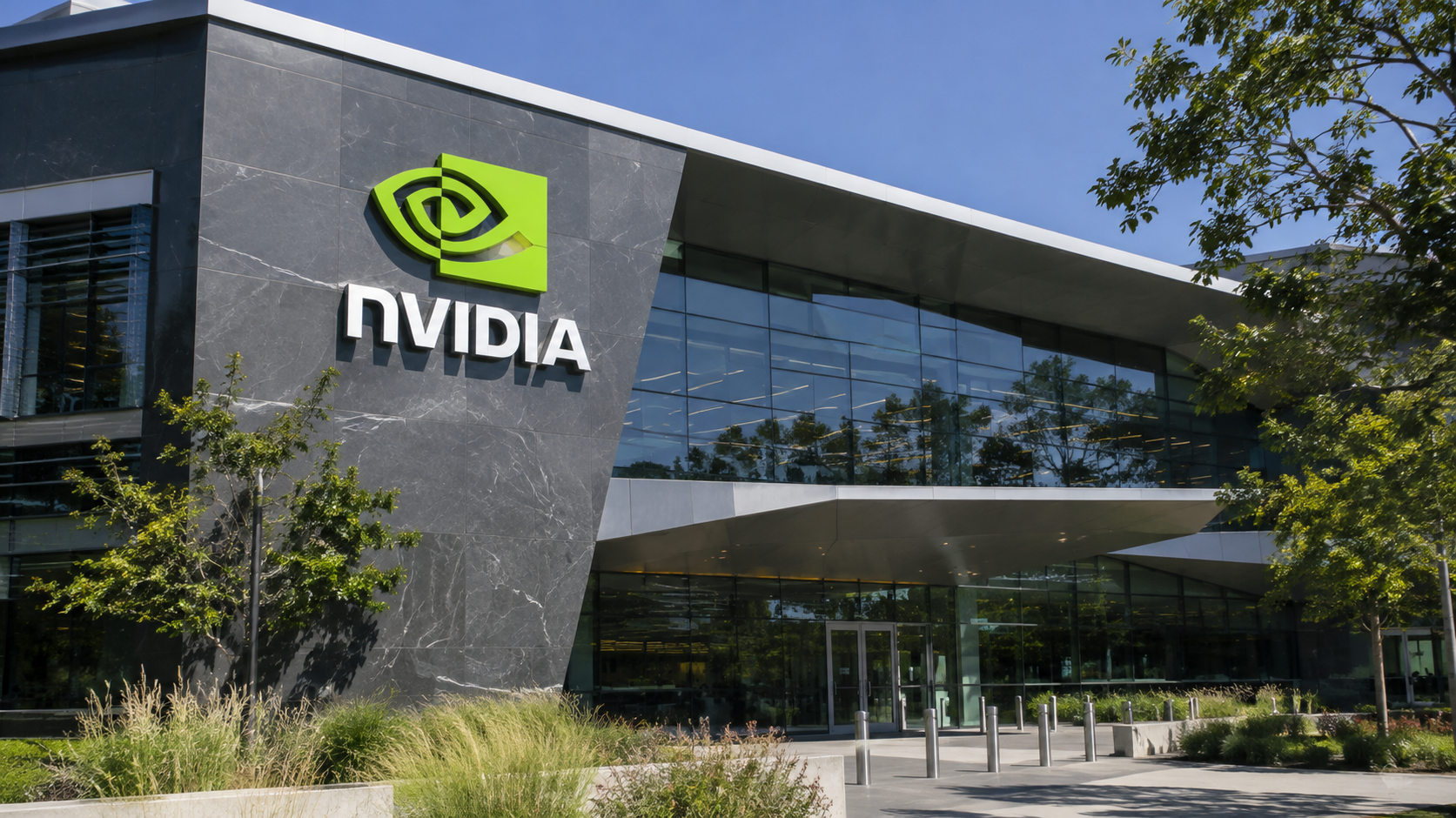
Nvidia shares NVDA plunged on Thursday as a broad technology selloff and concerns about the future of artificial intelligence (AI) infrastructure spending weighed on semiconductor stocks.
The stock fell as much as 8.53%, trading around $183.06 and approaching its weakest levels in three months.
If sustained, the decline would mark Nvidia’s worst daily performance since April 2025 and push its share price below $200 for the first time since July 30.
The selloff threatened to erase approximately $381 billion from Nvidia’s market value, which would rank as its second-largest one-day market capitalisation loss on record, according to Dow Jones Market Data.
The decline followed Democratic victories in the US midterm elections, which raised concerns that changes in political control could lead to tighter restrictions on data centre construction and higher infrastructure costs.
Data centre concerns weigh on Nvidia shares
Investors are concerned that Democratic lawmakers could push legislation requiring technology companies to cover more of the costs associated with electricity and water infrastructure upgrades for data centres.
Mike Townsend, managing director of legislative and regulatory affairs at Charles Schwab, said Democrats on Capitol Hill were likely to pursue measures that could slow the data centre boom.
Nvidia customers such as SpaceX and CoreWeave could face the most immediate impact from potential project delays.
Their shares also fell sharply on Thursday.
However, some analysts argue that restrictions in certain US states would not necessarily eliminate demand for AI infrastructure.
Gavekal US chief economist Will Denyer said technology companies could move projects to other states or overseas if local governments made construction difficult.
Nvidia has forecast 70% revenue growth for its fiscal 2028 year, which largely corresponds to calendar 2027.
The company has said supply constraints, rather than a lack of demand, have limited its growth outlook.
This could allow Nvidia to redirect chip supplies to customers in other locations if some data centre projects are delayed.
Valuation and earnings outlook offer potential support
Despite the steep decline, Nvidia’s valuation has become more attractive relative to the broader market.
The stock trades at around 14 times forward earnings, below the S&P 500’s multiple of 18.45, according to FactSet.
UBS strategist Keith Parker said semiconductor and AI infrastructure stocks faced negative pressure, but added that much of the weakness was already reflected in valuations and investor positioning.
Nvidia has also experienced several pullbacks below $200 since first crossing that level in April.
However, the stock had not previously fallen below $190 during those declines.
The company’s next quarterly earnings report, scheduled for November 17, could provide another catalyst.
Wall Street analysts are expected to publish earnings previews in the coming weeks, potentially influencing the average price target, which currently stands at around $333, according to FactSet.
Options trading also showed some positioning for a potential rebound, with several of the most active contracts being call options tied to prices of $195, $200 and $210.
Investor flags circular financing risks
Beyond the immediate market concerns, veteran investor George Noble has raised questions about Nvidia’s financing arrangements with customers.
The former Peter Lynch analyst argued that Nvidia’s growing influence in the S&P 500, where it accounts for roughly 8% of the index, creates risks reminiscent of Cisco’s position during the dot-com bubble.
He compared Nvidia’s customer lease guarantees and equity investments in companies buying its hardware with Cisco’s vendor financing arrangements in the late 1990s.
Cisco’s shares eventually fell 89% after telecom customers struggled financially.
Noble described the current structure as a potentially dangerous form of circular financing, warning that customer defaults could expose Nvidia to losses.
He also highlighted a rising wedge pattern in Nvidia’s share-price chart, which technical analysts often associate with a possible bearish reversal.
The post Nvidia stock plunges 8% as AI spending fears and financing risks mount appeared first on Invezz
