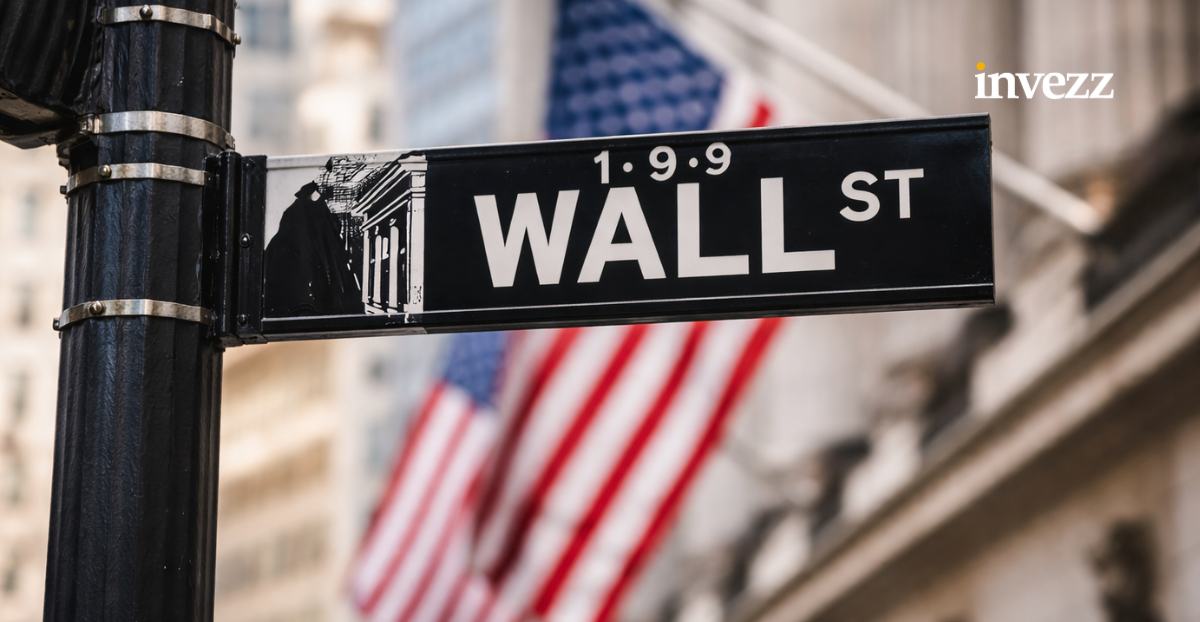
US stocks closed lower on Tuesday as hotter-than-expected inflation data strengthened expectations of a Federal Reserve rate increase in December and raised concerns about a more aggressive tightening cycle.
The Consumer Price Index (CPI) rose 0.4% in October, exceeding economists’ expectations of a 0.3% increase.
It marked the third consecutive monthly gain of at least 0.4%, following a 0.6% rise in September.
Core CPI, which excludes food and energy, also increased 0.3%, above forecasts of 0.2%.
The Dow Jones Industrial Average fell 161.95 points, or 0.31%, to 52,227.80.
The S&P 500 declined 0.38% to 7,521.48, while the Nasdaq Composite lost 0.74% to close at 25,067.23.
Inflation data strengthens expectations of Fed rate hikes
The inflation report reinforced expectations that the Federal Reserve could raise interest rates at its December meeting.
Markets fully priced in at least a 25-basis-point increase, compared with an 84% probability on Monday, according to CME FedWatch data.
Expectations of a larger 50-basis-point increase also rose to 11.8%, after the possibility had received no consideration in the previous session.
The shift in rate expectations followed comments from Fed Governor Christopher Waller, who indicated that a December increase was likely and that policymakers should consider a larger move if inflation worsened.
Other central bank officials also adopted a hawkish tone.
Dallas Fed President Lorie Logan said the central bank needed at least two additional quarter-point increases to bring inflation down and suggested they might need to happen promptly.
Kansas City Fed President Jeff Schmid described the current policy rate as fairly accommodative.
Meanwhile, Fed Vice Chair of Supervision Michelle Bowman said inflation remained the central bank’s top priority but stopped short of calling for further rate increases.
Treasury yields rose sharply following the data.
The two-year Treasury yield gained nearly 20 basis points, while the 10-year yield moved back above 5%.
Technology stocks slide as Nvidia extends losses
Technology shares led the market decline, with the S&P 500 technology sector falling more than 1% to become the worst-performing of the 11 major sectors.
Nvidia dropped 6%, extending its two-session decline to around 10%.
The stock remained under pressure amid scrutiny of CEO Jensen Huang’s reported relationship with Chinese businesswoman Alice Huang and allegations surrounding chip shipments to China.
The Information reported that the relationship facilitated at least $7.5 billion in chip shipments through Chinese firms.
Nvidia has initiated an internal investigation into the allegations.
The broader Philadelphia semiconductor index recorded more moderate losses after gaining in the previous two sessions, reflecting continued volatility in the AI-related trade.
The decline in technology shares came after the S&P 500 and Nasdaq had advanced for two consecutive sessions, recovering from losses linked to concerns about potential regulations slowing AI infrastructure development.
Anthropic IPO adds to uncertainty around AI stocks
Investors also weighed the potential impact of Anthropic’s upcoming initial public offering.
The AI company said its offering could raise as much as $64.4 billion, valuing it at up to $1.4 trillion on a fully diluted basis.
The listing could intensify competition among major AI companies for investor capital and prompt portfolio repositioning as investors assess valuations across the sector.
Meanwhile, CoreWeave and its peer Nebius ended lower.
CoreWeave shares gained after market close after reporting resutls which met the Wall Street’s expectations.
CoreWeave shares have fallen about 33% this year, reflecting concerns about financing requirements and the outlook for the AI boom.
AI disclosure: AI tools assisted with research and drafting of this piece. An Invezz editor reviewed the facts, sources and wording before publication. Any opinions or analysis are Invezz’s, not those of an automated system.
The post Dow falls 162 points as hotter US inflation fuels fears of Fed rate hikes appeared first on Invezz
